AIm:The Foundation
AIM: The Foundation uses symbolism to showcase the context behind major protests that the American Indian Movement organized. These posters illustrate the hardships that Native Americans endured at the time. This collection of posters represent the specific obstacles Native Americans faced leading up to each protest. I hope that this series of posters can educate or remind people of the truth behind American history. It’s our responsibility as citizens of this country to be aware of our history and to learn from it going forward. This project was used for my senior exhibition at Augsburg University 2025.
Occupation of
alcatraz island
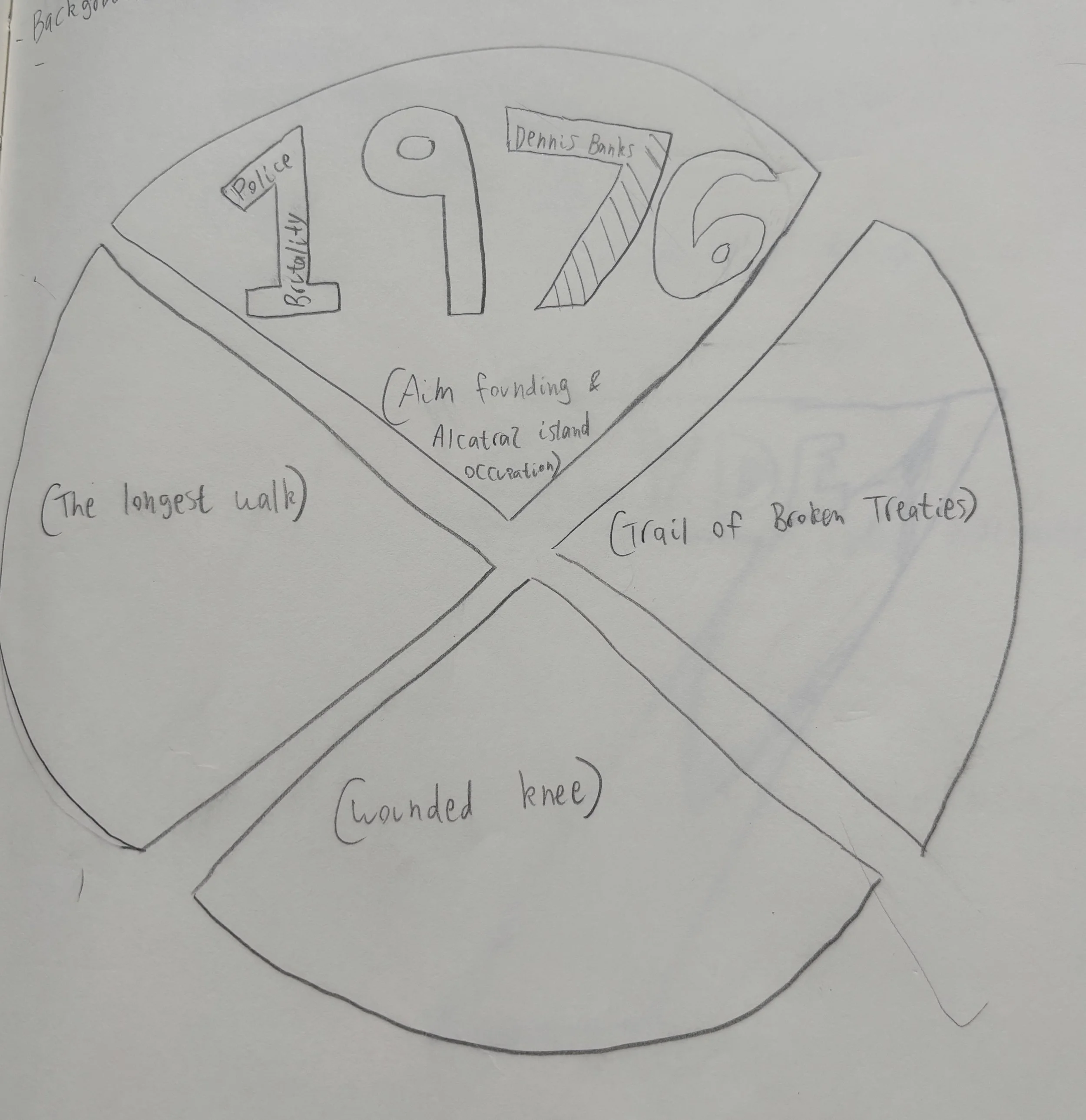
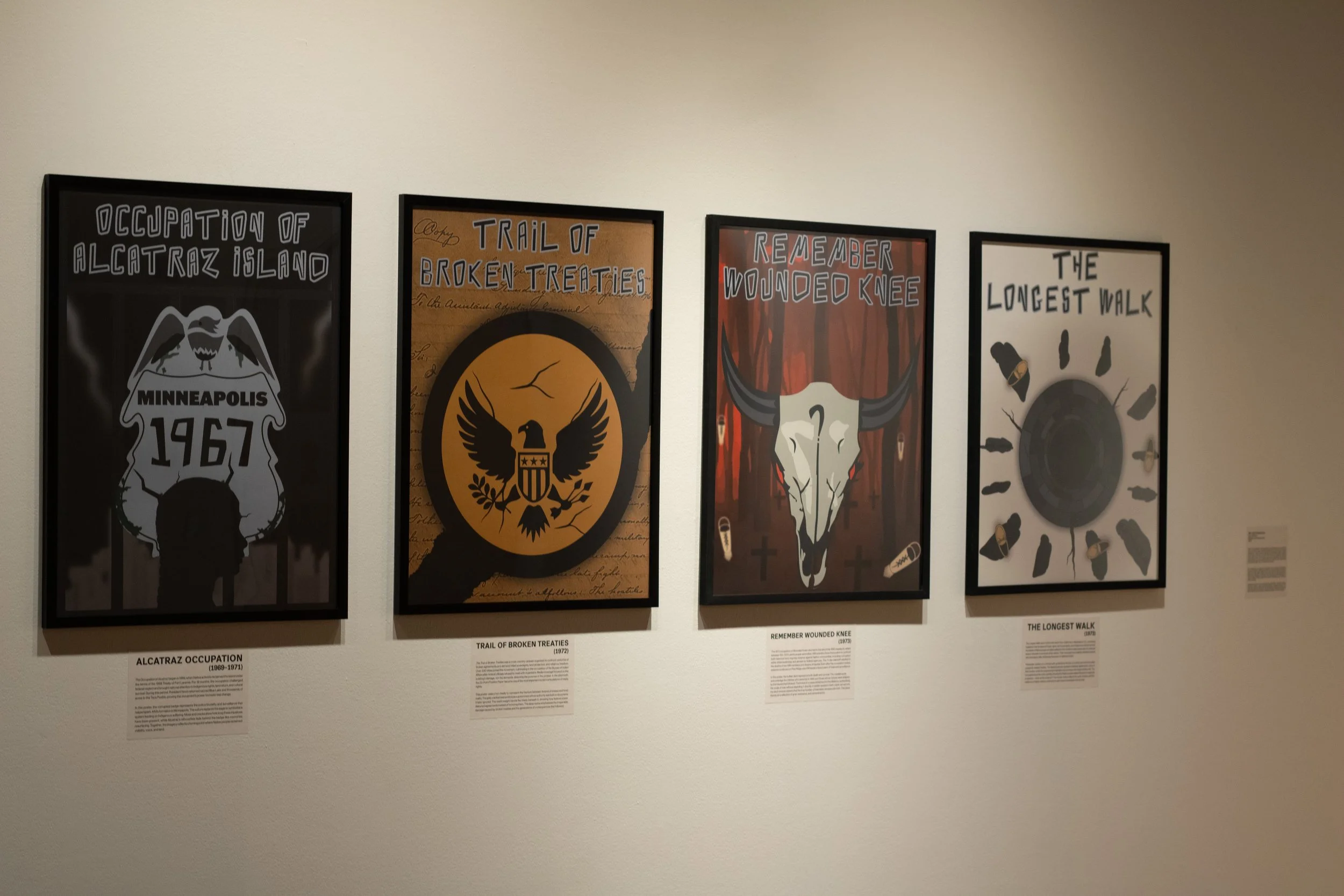
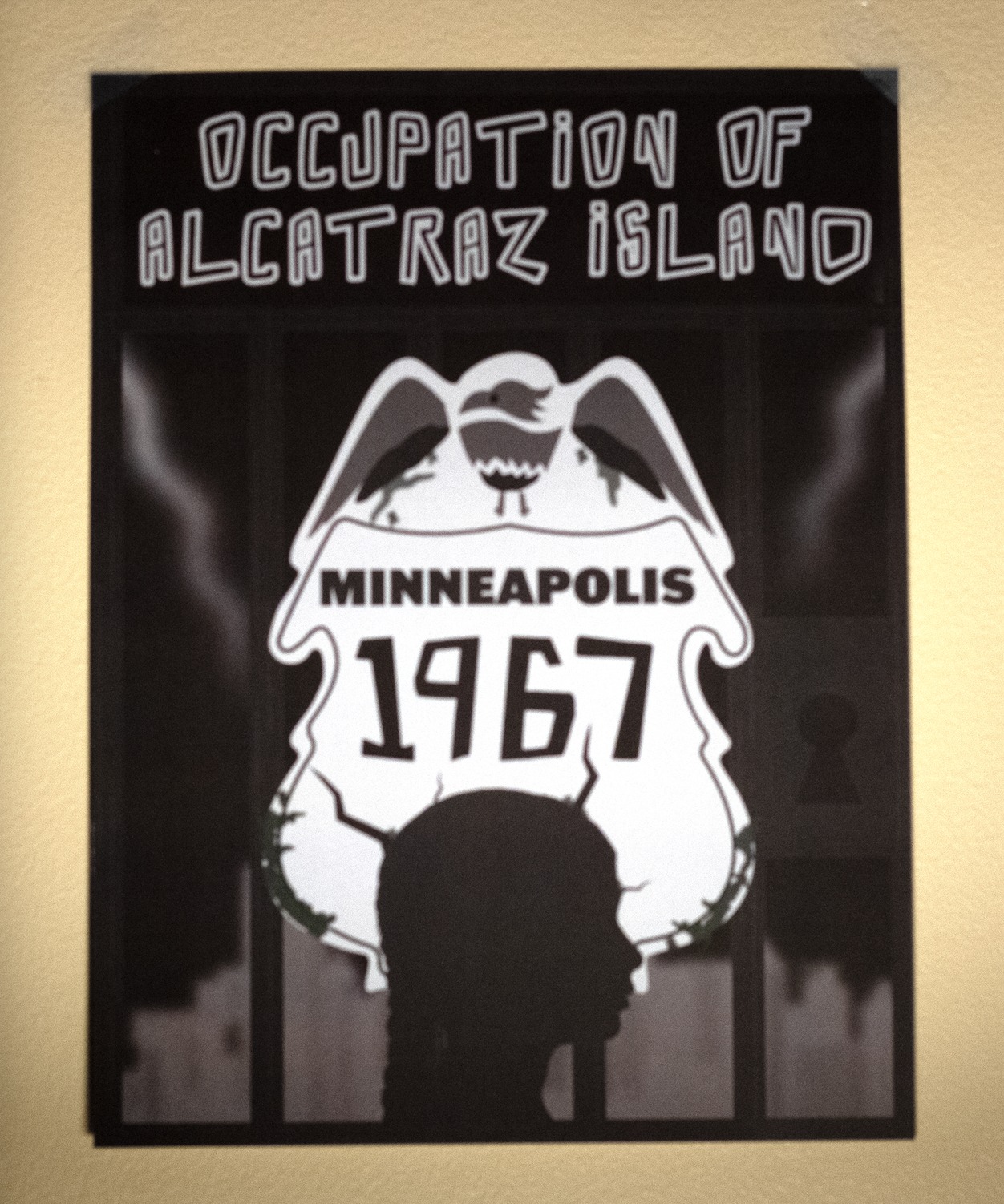
The Occupation of Alcatraz Island began in 1969, when Native activists reclaimed the island under the terms of the 1868 Treaty of Fort Laramie. For 19 months, the occupation challenged federal neglect and brought national attention to Indigenous rights, land return, and cultural survival. During this period, President Nixon returned sacred Blue Lake and thousands of acres to the Taos Pueblo, proving the movements power to create real change.
In this poster, the corrupted badge represents the police brutality and survellieve that helped spark AIM’s formation in Minneapolis. The vulture replaces the eagle to symbolize a system feeding on Indigenous suffering. Moss and cracks show how long these injustices have been present, while the silhouette represents Clyde Bellecourt being arrested at 11 years old for petty crimes. Together, the imagery reflects a turning point when Native Americans reclaimed visibility, voice, and land.
Trail of
Broken treaties
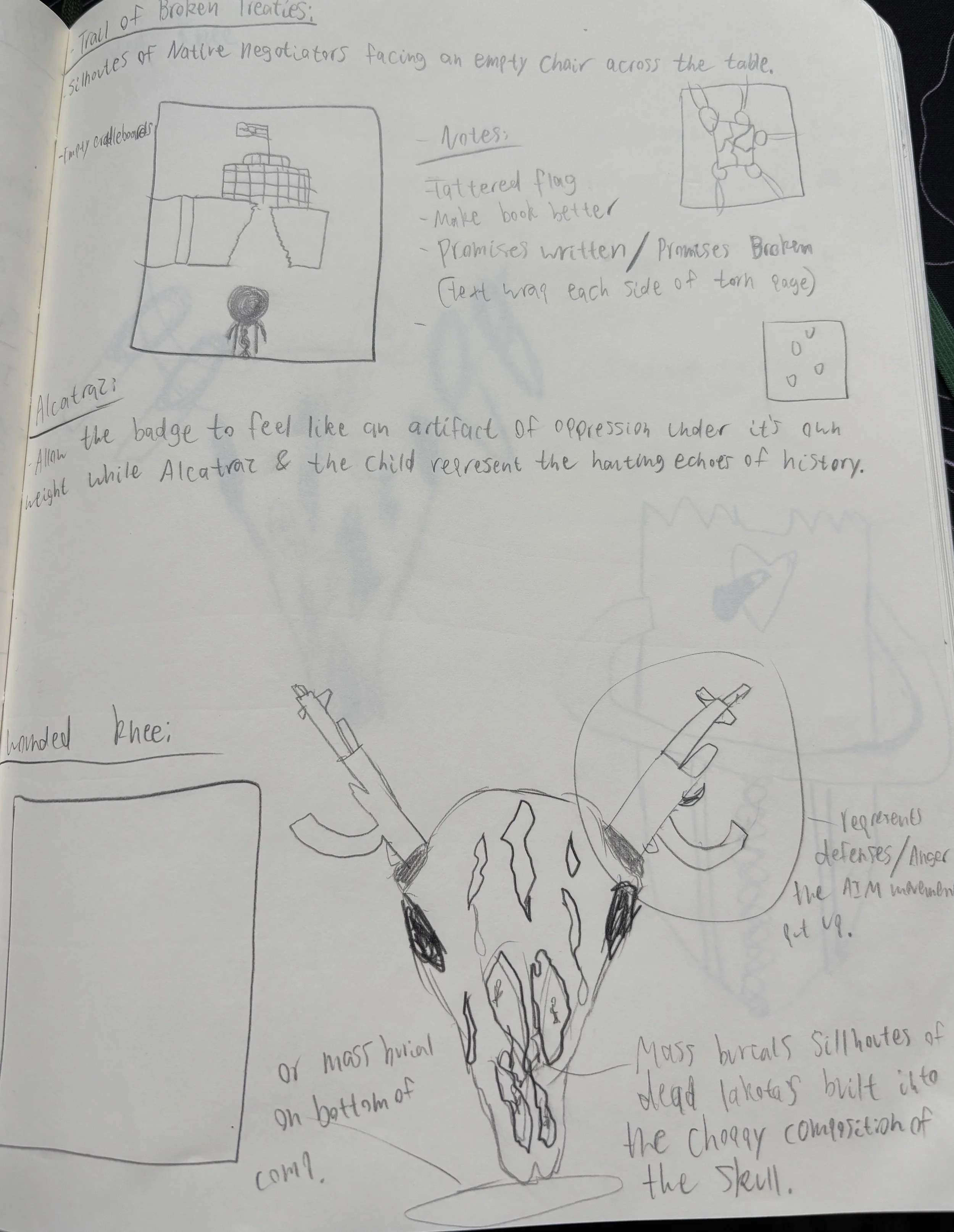
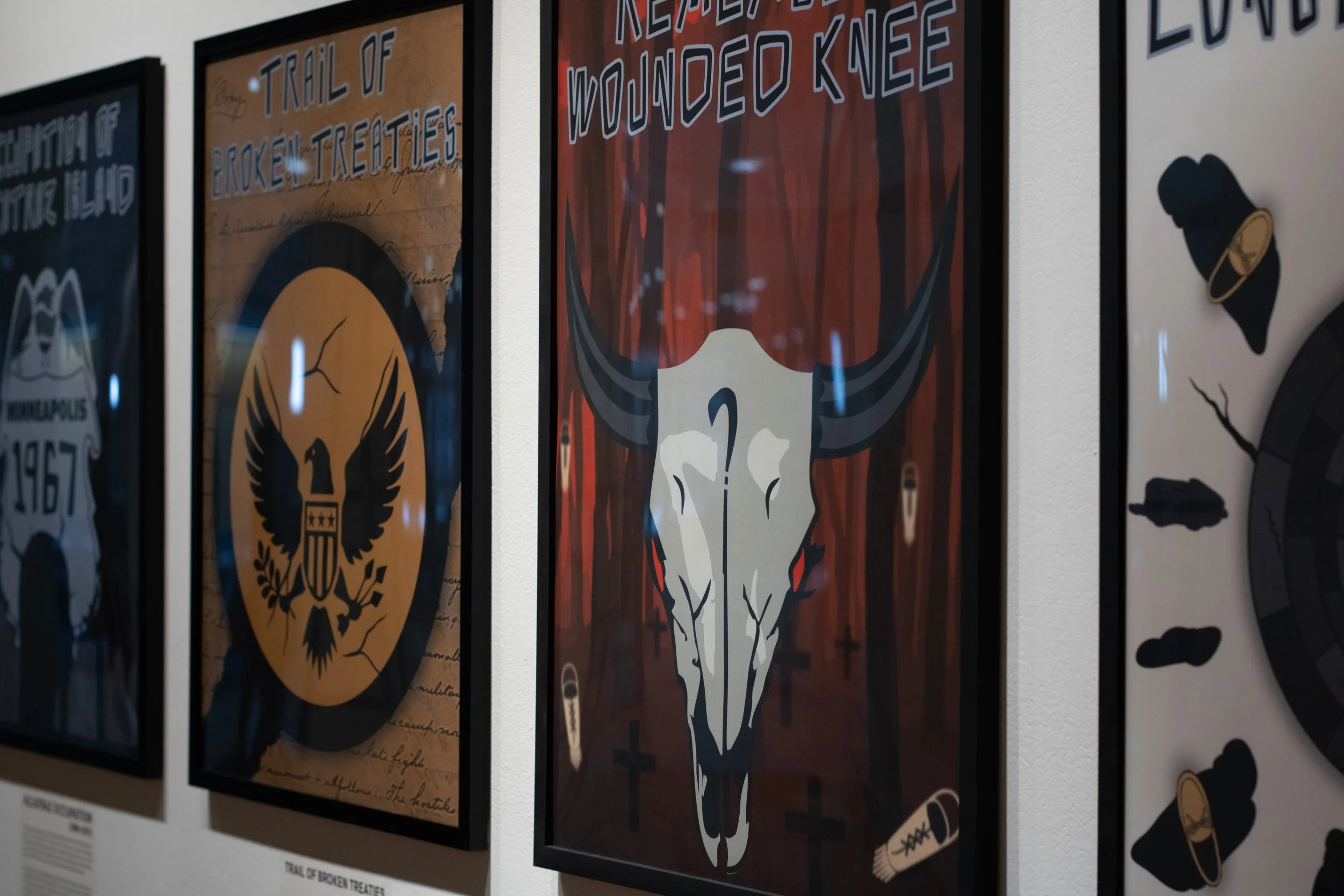
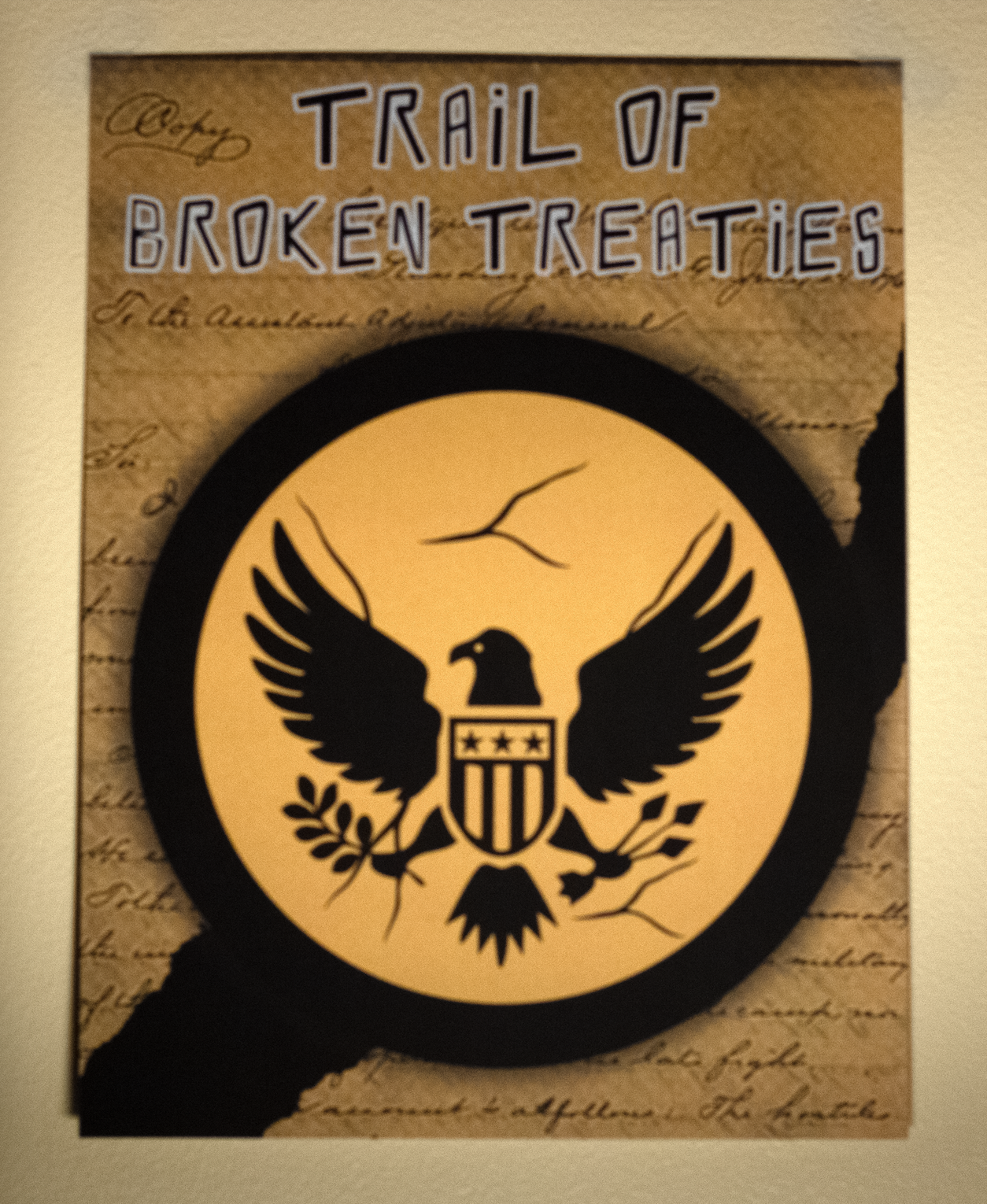
In 1972, The Trail of Broken Treaties was a cross-country caravan organized to confront centuries of broken agreements and demand tribal sovereignty, land protection and religious freedom. Over 200 tribes joined the movement, culminating in the occupation of Bureau of Indian Affairs after federal officials refused to meet with organizers. Media coverage focused on the building’s damage, not the demands, destroying the purpose of the protest. In the aftermath, the 20-Point Position Paper became one of the most important modern articulations of treaty rights.
This poster uses a torn treaty to represent the fracture between federal promises and lived reality. The gold, cracked seal symbolizes a government whose authority was built on documents it later ignored. The seal’s weight bends the treaty beneath it, showing how federal power destroyed agreements instead of honoring them.
Remember
Wounded Knee
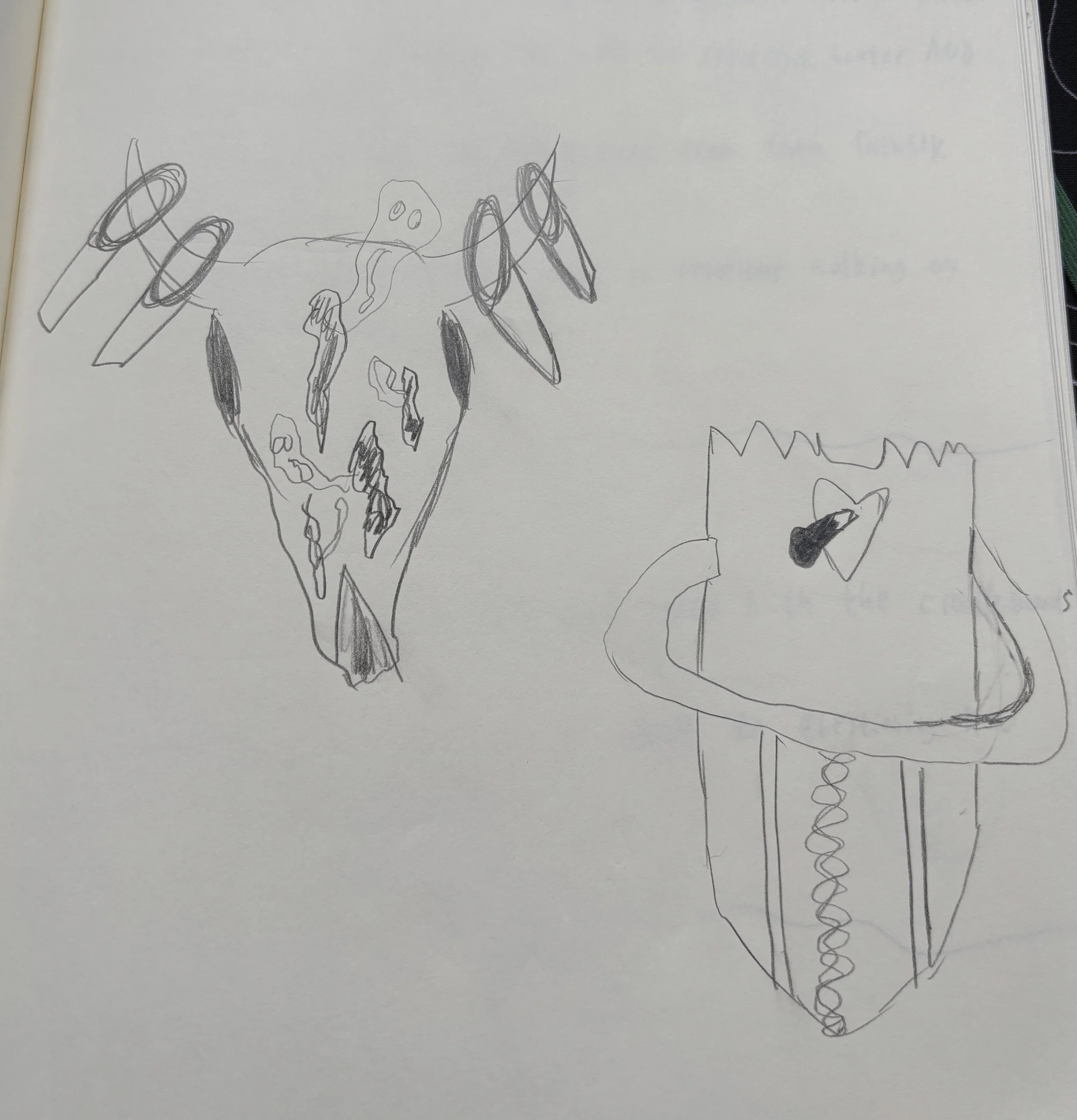
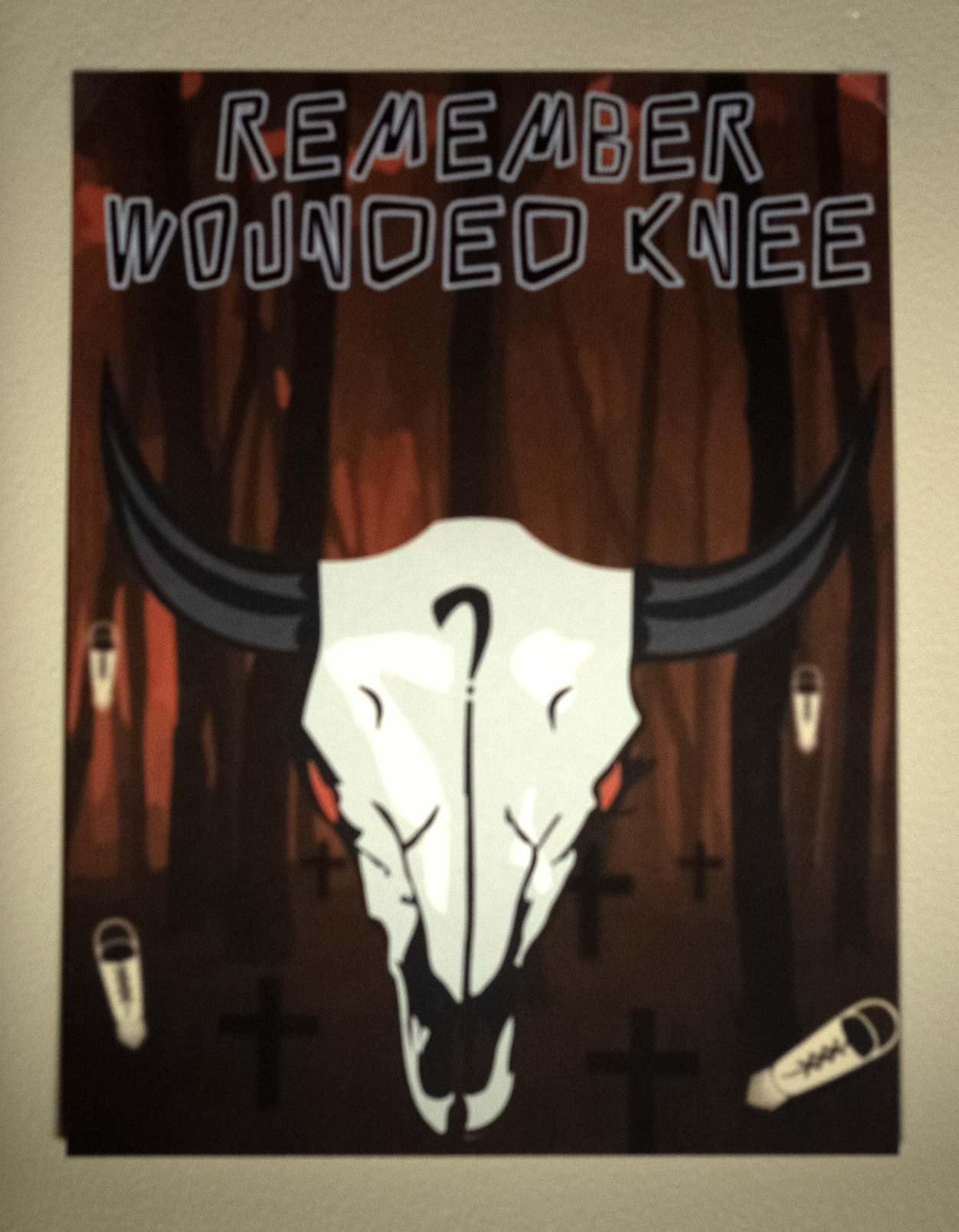
The Occupation of Wounded Knee in 1973, returned to the site of the 1890 massacre, where between 150-300 Lakota men, women and children were killed. AIM activists chose the location to confront both historical and ongoing violence against Native communities, including corruption within tribal leadership and abuses by federal agencies. The 71-day standoff resulted in the deaths of the AIM members and dozens of injuries. Even after the occupation ended, violence continued on Pine Ridge, and AIM leaders faced years of trials and surveillance.
In this poster, the buffalo skull represents both death and survival. The cradleboards acknowledge the children who were lost in 1890 and those whose futures were shaped by the trauma that followed. The forest of crosses stretches into the distance, symbolizing the scale of loss without depicting it directly. A subtle question mark crack carved into the skull reminds the viewers that the true number of lives taken remains unknown. The piece stands as a reflection of grief, resistance, and remembrance.
The longest walk
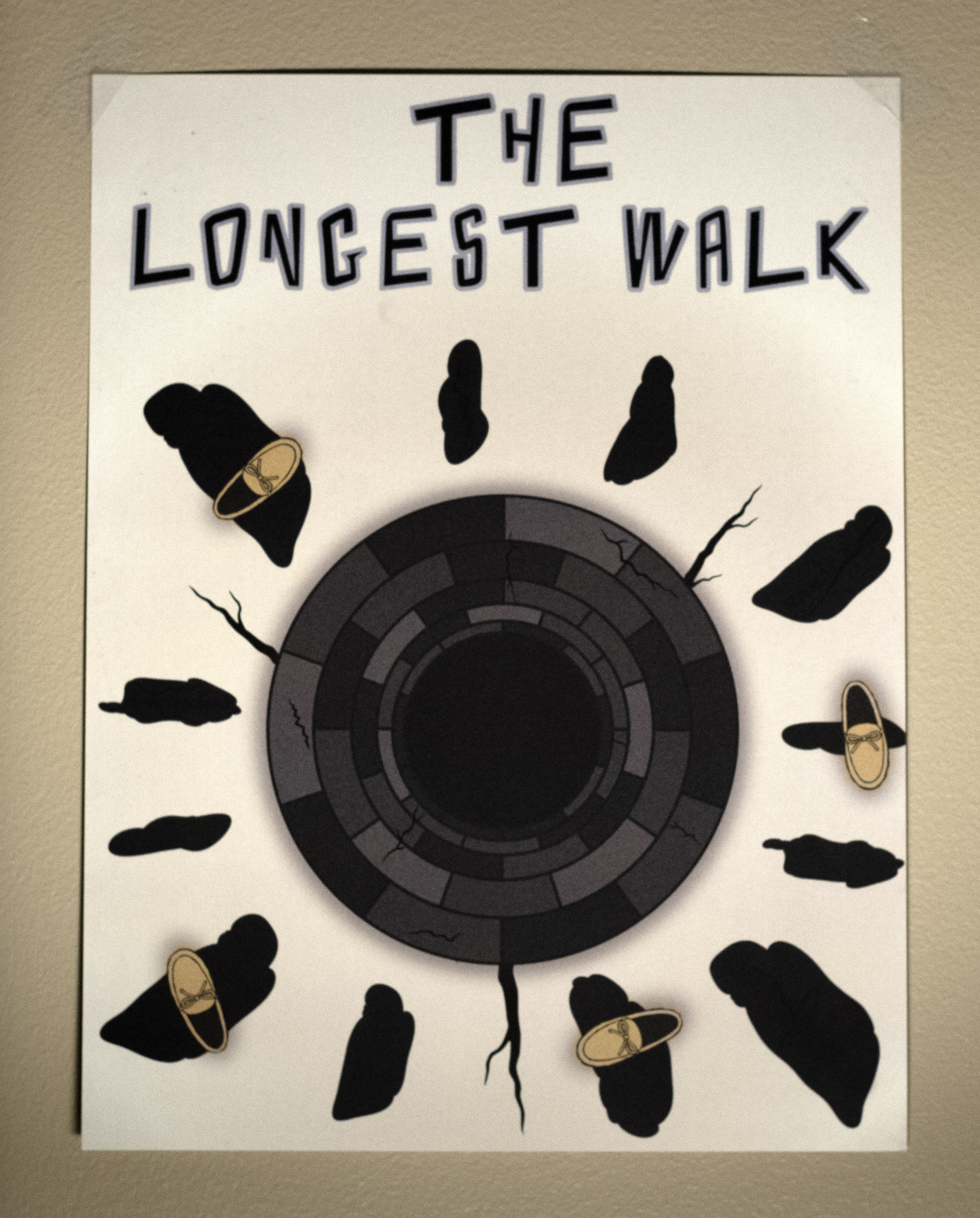
The Longest Walk (1978), was a 3,000 mile march from California to Washington, D.C., protesting legislation that threatened treaty rights, land sovereignty, and Indigenous cultural survival. Hundreds of Native people and allies waked for five months to raise awareness of continued federal attempts to terminate tribal nations. Their movement successfully defeated several anti-sovereignty bills, reinforcing the power for collective action.
This poster centers on a cracked well, symbolizing the loss of control over land and water caused by violated treaties. The stepping stones represent individual agreements, many of them broken, while the engraved text highlights the promise that shaped Native life. The mocassins trace the circle carefully, showing that Native people walked this path in response to injustice-not as the cause of it. The circular motion reflects the cycle of history and the resilience of Native nations continuing to walk toward sovereignty and survival.
Process